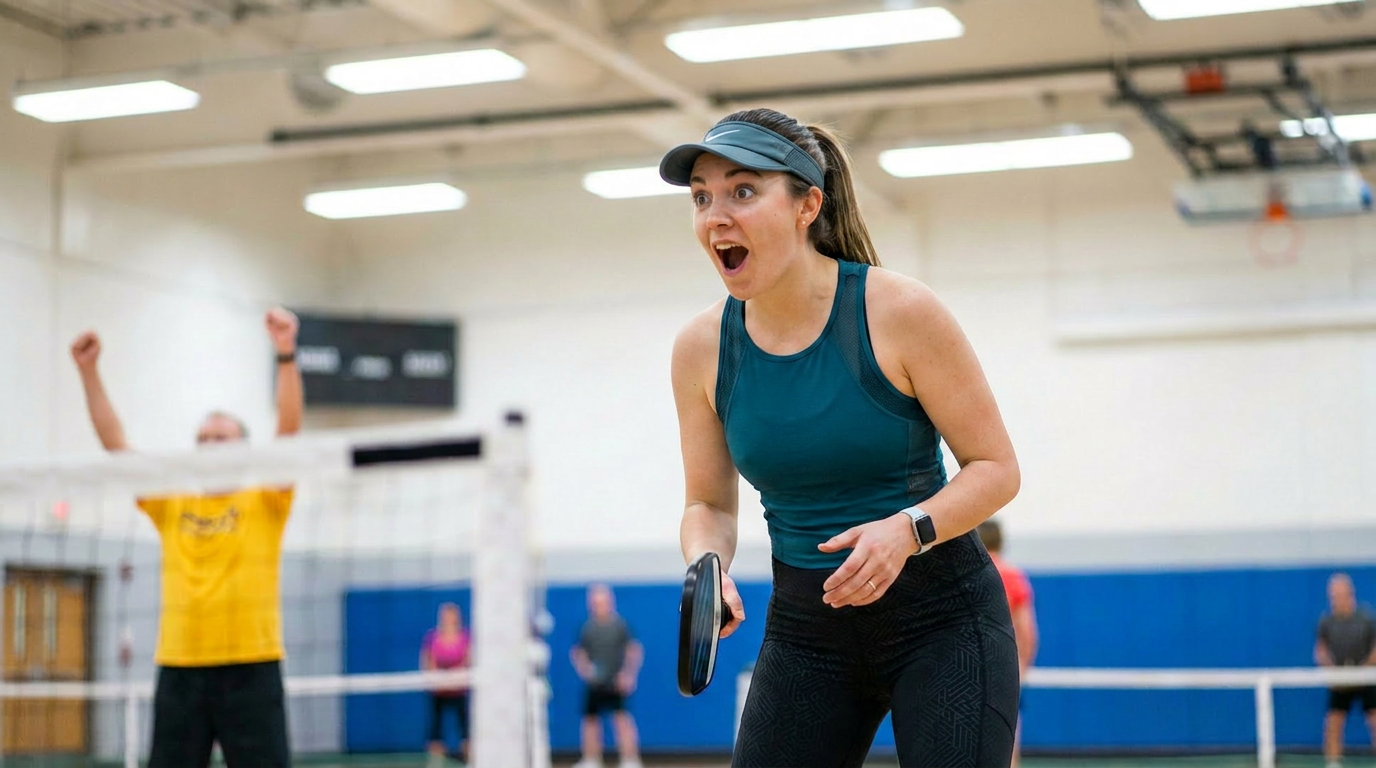
The short answer is yes. Easier than most people expect, and faster than almost any other racquet sport.
People arrive at their first session with reasonable caution. They've assumed that any sport involving a net, a paddle, and a scoring system will take a while to feel natural. Most of them leave having had a proper game, won some points, and already thinking about when they're coming back.
Quick answer: Yes - most people are in a proper rally within their first fifteen minutes on court. The basics take one session. Real confidence comes within a few weeks.
The learning curve in pickleball is genuinely short. But it's worth understanding why - because it's not just that the rules are simple. Several things about the sport combine to make early success unusually likely.
The court is smaller than you think
A pickleball court is significantly smaller than a tennis court. That might sound like a minor detail. It isn't.
A smaller court means you're never far from the ball. Positioning becomes instinctive more quickly. You spend your first session actually playing rather than chasing shots to the back of a large court and arriving too late to do anything useful with them. The physical demands are manageable from the start, which frees your brain up to focus on the game rather than just keeping up.
The ball gives you time
The plastic ball used in pickleball moves more slowly than a tennis ball and less unpredictably than a shuttlecock. That extra fraction of a second - the time between the ball leaving your opponent's paddle and arriving at yours - is more valuable than it sounds. It gives you time to read the shot, move into position, and make a decision about what you're going to do.
In faster sports, beginners often feel like they're always slightly behind the game. In pickleball, that feeling fades much more quickly than in anything else you've probably tried.
The paddle is forgiving
A pickleball paddle has a solid, flat surface with a generous sweet spot. Unlike a strung tennis racquet, where mishits can send the ball almost anywhere, a pickleball paddle is far more predictable. Clean contact happens sooner. The ball goes roughly where you intended more often than not.
That early sense of control - of actually directing the ball rather than just making contact with it - is a significant part of why pickleball clicks so quickly.
With a strung tennis racquet, mishits punish you. With a pickleball paddle, they just land a bit shorter. The margin for error is genuinely bigger - and that matters a lot in the first few sessions.
You're playing from the start
This is perhaps the most important thing.
At your first pickleball session, you won't spend an hour drilling before you're allowed to play a point. You'll be shown the basics, handed a paddle, and put on court. Within the first fifteen to twenty minutes of arriving, most beginners are in a proper game - serving, rallying, winning points, losing points, figuring it out as they go.
That immediate immersion is part of what makes pickleball feel learnable so quickly. You're not working towards the game. You're in it.
Easy to learn doesn't mean easy to master
Worth being honest about this.
The basics of pickleball are genuinely accessible. The deeper layers of the game - the soft touches near the net, the strategic patience required to construct a point rather than just react to one, the ability to read opponents and change tactics mid-rally - take considerably longer to develop.
That's not a warning. It's actually one of the sport's great strengths. Pickleball gives you early success and a long journey. You can enjoy it from the very first session and still be discovering new things about it years later. Most players find that combination - low floor, high ceiling - is exactly what keeps them coming back week after week.
Pickleball is easy to learn. The part nobody quite prepares you for is how quickly you stop wanting to stop.
Find a pickleball court near you on The Pickleball Directory | The Home of UK Pickleball and see for yourself.

.png)