.png)
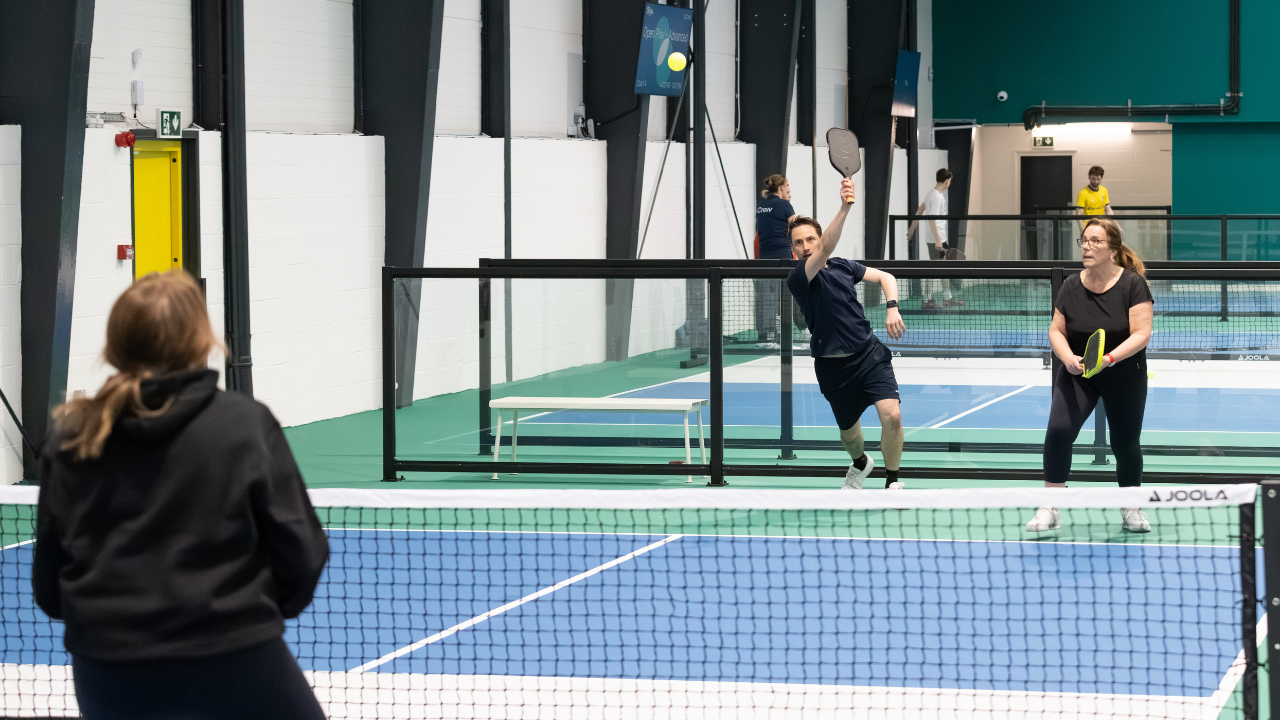
Your first pickleball session is usually easy enough to get into. You pick up a paddle, join a game, and within a few minutes you're playing.
What tends to catch people off guard isn't the gameplay itself - it's the language around it. Terms come up quickly, often mid-point or between rallies, and if you haven't heard them before, it can feel like you've missed something important.
Most of these are straightforward once you hear them in context. Here's a quick guide to the ones that come up most.
1. The kitchen
One of the first things you'll hear is someone mentioning "the kitchen" - often in a slightly urgent tone. "Stay out of the kitchen" or "watch your feet there."
Nothing to do with anything off court. The kitchen is the non-volley zone on either side of the net, and the rule is simple: you can't hit the ball out of the air while standing in it.
This usually comes up when someone steps forward to take a shot without realising they've crossed the line. It's one of the most common early mistakes, which is why people tend to point it out. Everyone learns this one sooner or later - usually the hard way.
2. Dinking
At some point during a slower rally, you'll hear someone say "just dink it" or "keep it soft."
A dink is a controlled, gentle shot played just over the net, typically landing in the kitchen area. It's less about winning the point immediately and more about resetting the rally and keeping control.
For beginners, this can feel counterintuitive - the instinct is often to hit harder. But pickleball rewards patience just as much as power. When someone suggests dinking, they're trying to slow things down before the point gets away from you.
3. The score call
Before each point, the server calls the score. If you're new, hearing something like "two-one-one" said quickly before the serve can feel confusing.
You'll also hear people ask "what's the score?" or remind each other to call it out. It's just part of keeping the game organised. The rhythm of it becomes familiar quickly after a few points.
4. "Yours," "mine," and "leave it"
In doubles, communication becomes part of the game almost immediately.
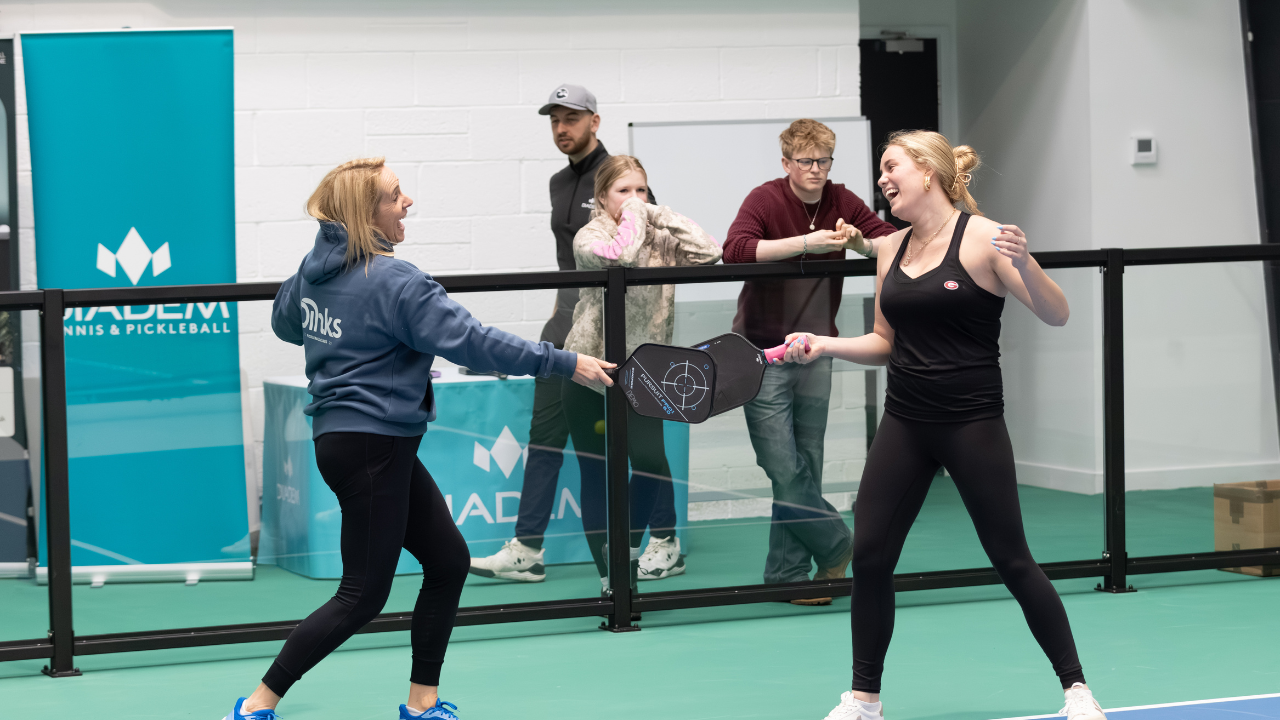
"Yours," "mine," and "leave it" aren't official terms - but they're essential in practice. At first there'll be hesitation. Both players going for the same ball, or both leaving it. That settles quickly as you get more comfortable, and once it clicks, it tends to be surprisingly smooth.
5. Side out
When the serving team loses a point, you'll often hear "side out" - followed by a quick shift in positions as the serve passes to the other team.
It sounds more technical than it is. The game moves on quickly, and you'll pick it up after hearing it a couple of times.
6. Calling the ball
Line calls are handled by the players, so you'll hear "out" or "just out" when a ball lands beyond the boundary.
Sometimes there's a brief pause - "was that in?" - but in most casual sessions, calls are made quickly and the game continues. There's an element of trust in it, which contributes to the overall tone. Competitive, but rarely contentious.
7. Faults
If something goes wrong in a point, someone might call "fault" - or more specifically point out what happened: into the net, out of bounds, a foot fault near the kitchen.
These moments tend to be brief and matter-of-fact. The point ends, the score updates, and the next rally starts. No drama, just a quick reset.
What you'll notice after a short time
At the start, there's a lot being said around you. But after a game or two, the pattern becomes clear.
You start recognising when someone's warning you about the kitchen, when they're asking you to take a shot, when they're resetting the point. Without really trying, you begin using the same language yourself.
Before long you're calling "yours" without thinking and reminding someone else to stay out of the kitchen. That's usually the moment you realise you've properly settled in.
The best bit? You don't need to understand every term before you step on court. Once you've heard "just dink it" mid-rally, it sticks far better than reading about it beforehand.
Ready to hear it in action? Find a pickleball court near you on The Pickleball Directory | The Home of UK Pickleball.