.png)
If you've watched a game of pickleball or spoken to anyone who plays, you've probably heard the kitchen mentioned. It comes up constantly - in the rules, in tactics, in the advice beginners get on their first session. Understanding what it is and why it matters will make your first game a lot clearer.
What the kitchen actually is
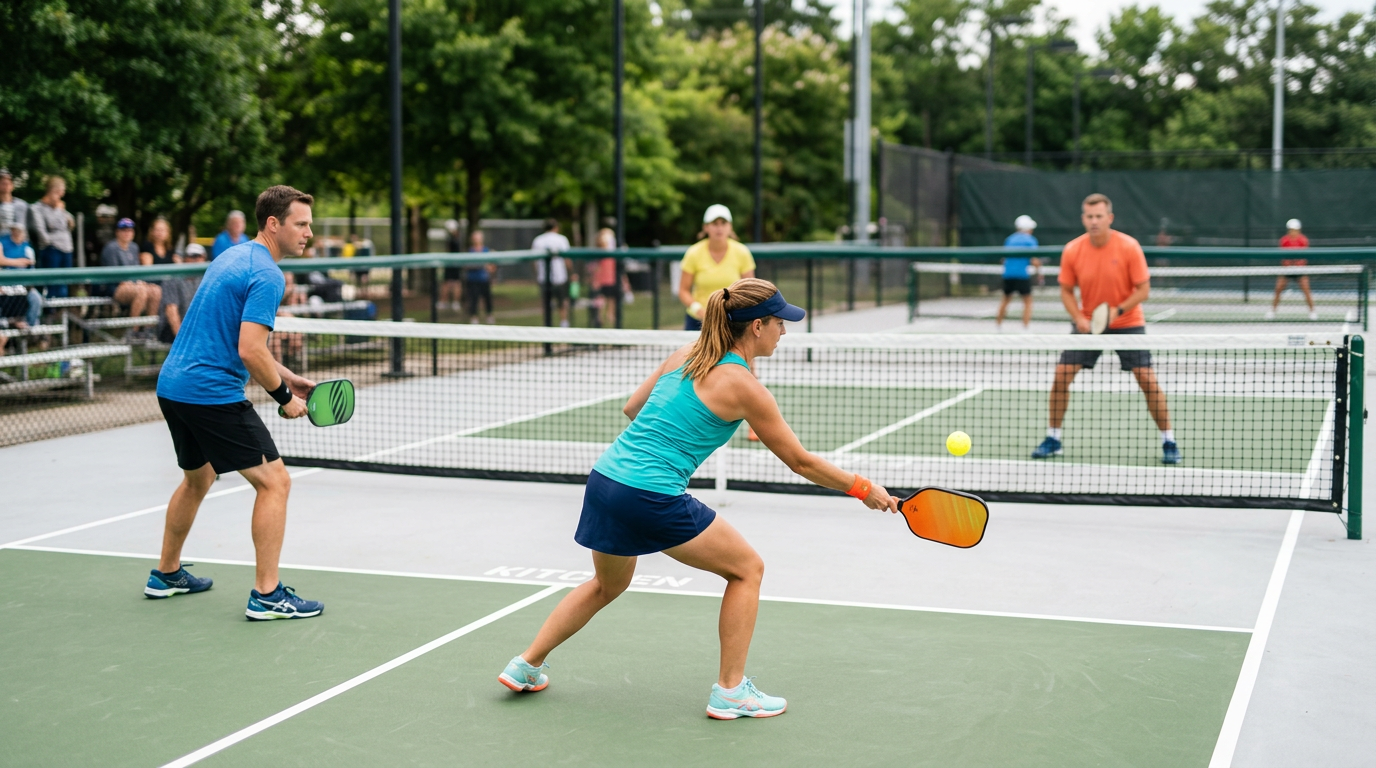
The kitchen is the informal name for the non-volley zone - a rectangular area on each side of the net, extending seven feet back from it and running the full width of the court. It's marked clearly with a painted line.
The name is thought to come from the phrase "if you can't stand the heat, stay out of the kitchen." Whether that's the real origin or just a good story, the name has stuck completely. Nobody calls it the non-volley zone in casual play. It's always the kitchen.
The rule
You cannot volley the ball while standing in the kitchen or on the kitchen line.
A volley means hitting the ball out of the air before it bounces. If you're standing in the kitchen - or with either foot touching the line - and you hit the ball before it bounces, that's a fault and the point goes to the other side.
You can stand in the kitchen as much as you like. You can let the ball bounce in there and play it perfectly legally. The restriction is specifically about volleying from within that zone.
Why the rule exists
Without the kitchen rule, the obvious tactic in pickleball would be to stand right at the net and smash everything. The game would become a contest of who can hit hardest from the closest distance.
The kitchen rule prevents that. It forces players to think more carefully about positioning, use softer shots, and be patient rather than aggressive at the net. It's the reason pickleball rewards strategy and touch over pure power - and a big part of what makes the game enjoyable at every level.
The detail that catches everyone at least once
The kitchen rule has one element that surprises almost every new player.
If you volley the ball and your momentum carries you into the kitchen afterwards - even after the shot is played - it's still a fault. The rule covers the entire motion, not just the moment of contact.
So if you're standing just behind the kitchen line, hit a volley, and your follow-through takes a foot over the line, the point is lost. It feels harsh the first time it happens. After that, you naturally start giving yourself a little more space from the line.
What the kitchen means for how you play
Understanding the kitchen changes how you approach the game tactically.
The area just behind the kitchen line is actually where you want to be during a rally. Getting to that position gives you control of the point. The kitchen rule doesn't stop you from being close to the net - it just means you need to be precise about where your feet are.
The soft shots played into and around the kitchen - dinks, drop shots, controlled placements - are a huge part of pickleball at every level. Learning to be comfortable near the kitchen line, and patient enough to wait for the right ball to attack, is one of the biggest steps a beginner can take.
A simple way to remember it
You can be in the kitchen. You just can't volley from it.
Let the ball bounce first and you can play from anywhere on the court. Step in to volley and it's a fault. That's the whole rule.
It takes a session or two to stop thinking about it consciously. After that it becomes instinct - and you'll find yourself quietly spotting when other beginners forget it, just like everyone did with you.
Ready to get on court? Find a pickleball venue near you on The Pickleball Directory | The Home of UK Pickleball.


.avif)


.png)