.png)
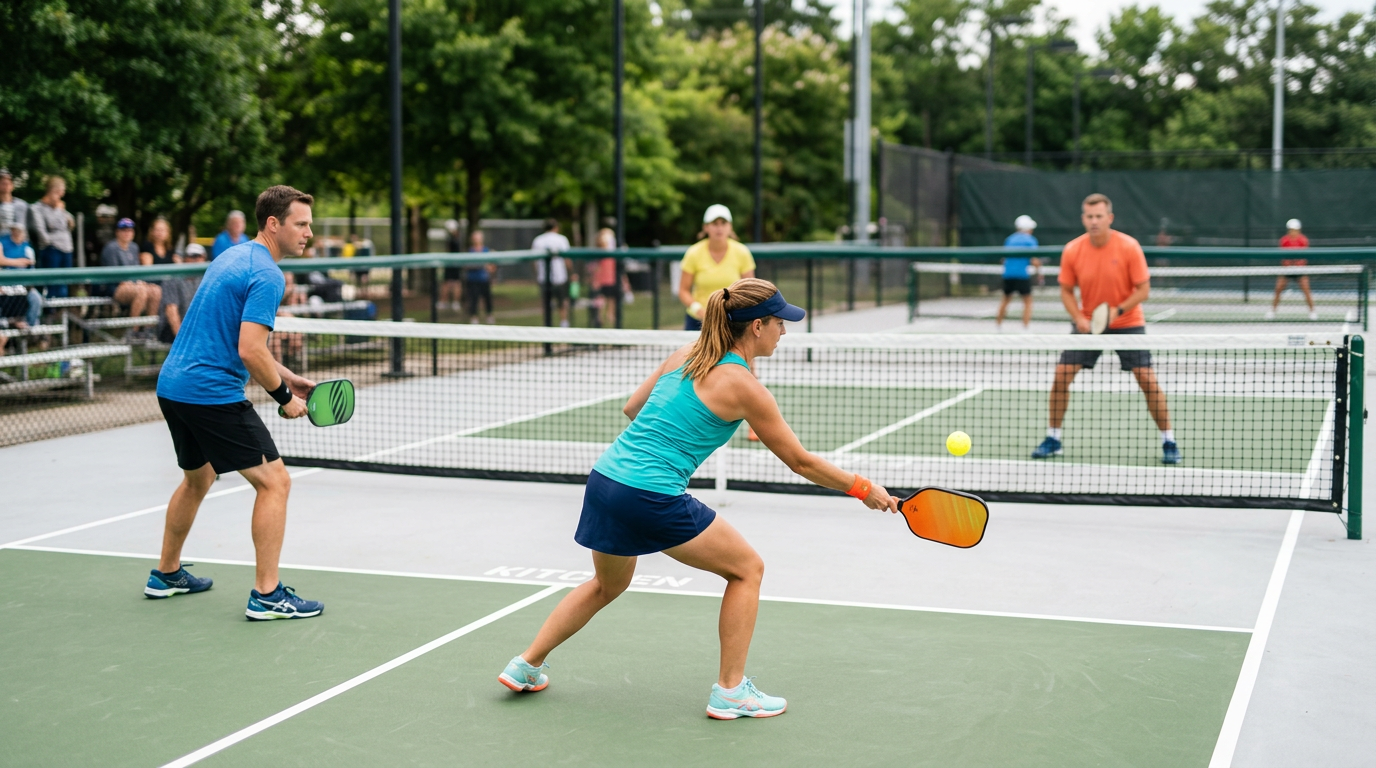
Not long ago, pickleball wasn't something you heard about very often. Now it's everywhere. Sessions are being added at leisure centres, courts are filling up, and someone you know has probably already suggested giving it a go.
So what's behind the growth?
It's playable from the first session
With most sports, there's a phase where you're just trying to get the basics right before anything feels enjoyable. Pickleball skips that.
Within your first session, you can have a proper rally, play actual points, and feel like you're genuinely in a game. That early success matters more than it sounds. If something feels playable straight away, you're far more likely to come back.
You don't need to be match-ready. Just ready to give it a go.
It's social without trying too hard
Pickleball has a way of bringing people together without forcing it.
You don't need to organise a group or bring a partner. Most sessions are set up so players rotate in and out, which means you naturally end up playing with different people. Conversations happen between points, games move quickly, and before long you recognise a few familiar faces.
It's the kind of setup where you can turn up alone and leave feeling like you've been part of something. Not every sport manages that balance.
It fits into a normal week
A lot of people aren't looking for something that takes over an entire evening - or requires a two-hour warm-up.
Pickleball is flexible. Games are short, sessions are manageable, and you can play for as long or as little as you like. It fits around your schedule rather than taking it over, which makes it much easier to make a regular habit of.
It's competitive enough to stay interesting
Pickleball sits in a comfortable middle ground. You're trying to win points, but the atmosphere stays relaxed. You can take it seriously or just enjoy the game - both work.
It's competitive enough to keep things engaging, but not so intense that it puts people off. That balance is harder to find than it sounds.
You improve without realising it
After a few sessions, something starts to click. You're getting to the ball earlier. Your shots are more consistent. Rallies last longer.
The interesting thing is that it doesn't feel like structured practice - you're just playing. But you're still improving. That kind of steady progress without pressure is a big part of why people keep coming back.
It spreads naturally
Pickleball grows the way most good things do - through word of mouth.
Someone tries it, enjoys it, mentions it to a friend. That friend comes along, brings someone else, and before long there's a regular group. If you've noticed more sessions appearing locally, it's usually because demand has built quietly in the background.
So why is everyone playing?
It's not just one reason - it's the combination that works. It's easy to start, genuinely social, fits into everyday life, and enjoyable at any level. Most sports get one or two of these right. Pickleball tends to manage all of them.
And the clearest sign? Ask anyone who's tried it how many times they went back. That tends to answer the question faster than anything else.
Ready to see what the fuss is about? Find a pickleball court near you on The Pickleball Directory | The Home of UK Pickleball.