THE GAME FOR EVERYBODY

ADAPTIVE
Pickleball

Pickleball barely changes. The rules adapt to the player. Here is how to bring adaptive and hybrid play into everyday sessions, with no major disruption.‍

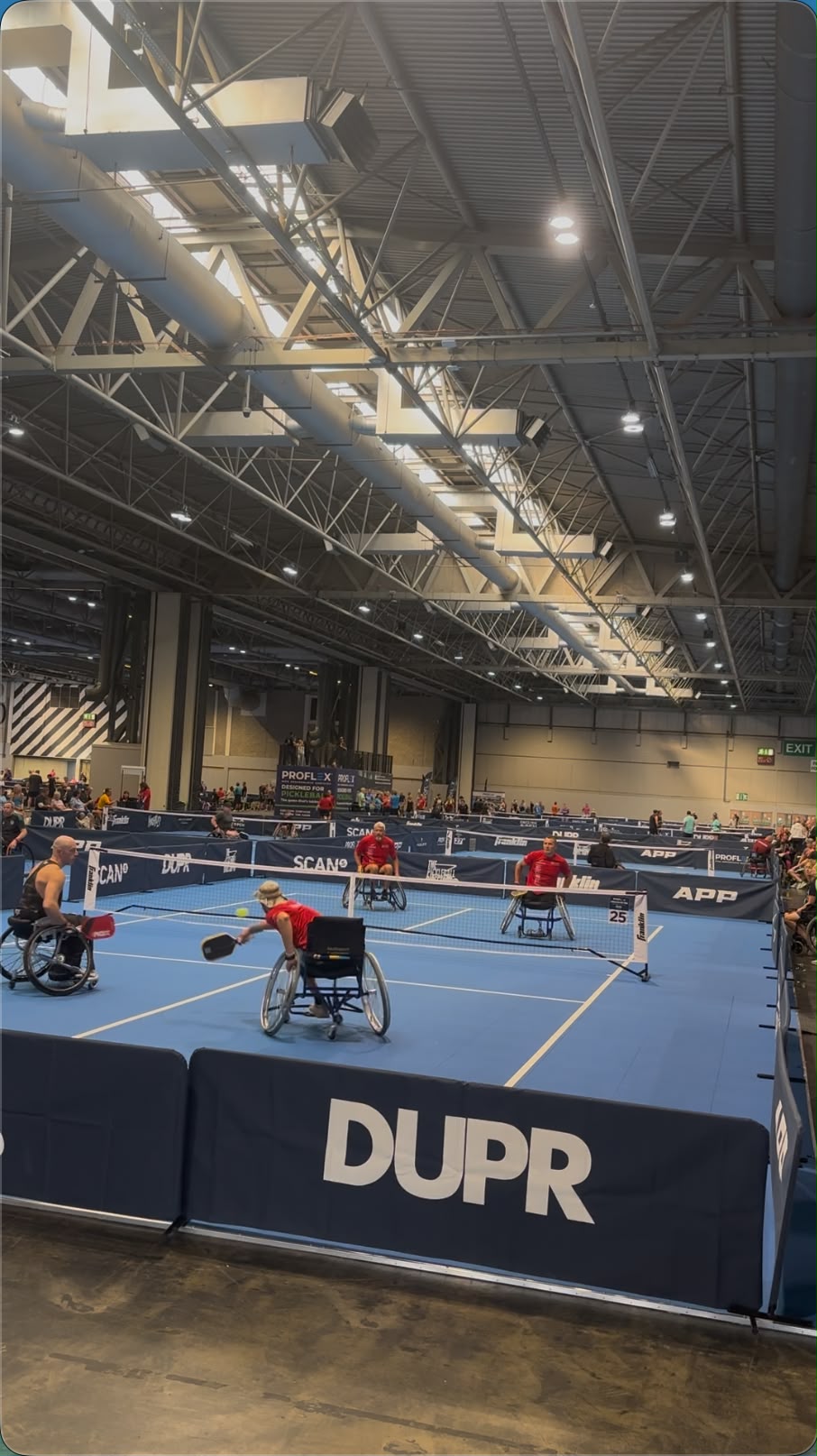
Wheelchair pickleball players competing in doubles on indoor pickleball courts.
ONE COURT. MORE WAYS TO PLAY.

We want to help build awareness of adaptive pickleball and show the pickleball community how to include adaptive and hybrid play in everyday sessions. From understanding the rules to making someone feel welcome, small changes can make a big difference.

UNDERSTAND / 01

THREE WAYS.
ONE GAME.

Adaptive, wheelchair and hybrid. What's the difference?
These terms are used in different ways around the world. Here's how we use them at The Pickleball Directory.

THE UMBRELLA TERM

Adaptive pickleball

Pickleball played with adjustments that allow people with disabilities to participate. This may include wheelchair users, standing players, and people with sensory, learning or other needs. Changes can involve rules, equipment or the way a session is run.

A SPECIFIC RULESET

Wheelchair pickleball

Pickleball played using a wheelchair, by players with or without a disability. The official rules specify particular allowances and restrictions around bounces, wheels, serving and volleying.

PLAYING TOGETHER

Hybrid play

A wheelchair player and a standing player can play together as a doubles pair. Each follows the rules applicable to their own mode of play. Hybrid doubles also has specific competition provisions.

About the illustrations: Where a diagram shows a wheelchair, it is explaining a wheelchair-specific rule. Adaptive pickleball is much broader than wheelchair play.

 EXPLORE THE RULES↗
PLAY TOGETHER

WHY HYBRID
PLAY MATTERS.

Hybrid play allows family members, friends, colleagues and classmates to share a court. A wheelchair player and a standing player can enjoy doubles together, with each following the relevant playing rules.

One court, different allowances

Players can participate together without everybody having to use identical adaptations. Explain which allowances apply before play begins.

Easy to introduce

An existing club session may be able to accommodate a wheelchair player without creating an entirely separate competition or activity.

Still pickleball

The rallies, tactics, teamwork, learning and enjoyment remain central to the experience.

PLAYING TOGETHER
ONE COURT.

Different allowances. Shared rallies.

Wheelchair and standing players can partner or play against each other. Each follows the rules relevant to their mode of play, with the format and any recreational adaptations agreed before the session begins.

Hybrid play does not require a particular mix of players in every recreational game. Organised competitions may have specific eligibility and format requirements.

LEARN / 02   ·   INTERACTIVE ADAPTIVE GUIDE

FIVE KEY
RULE CHANGES.

The same game, with a few important adaptations. Pick a rule, explore the diagram and switch between a legal example and a fault.

IMPORTANT DISTINCTIONThese five visual examples explain wheelchair-specific rules from the 2026 rulebook. Adaptive pickleball also includes standing players and other agreed adaptations, which have different provisions.

01 / THE TWO-BOUNCE ALLOWANCE
PICKLEBALL COURT · TOP VIEW LIME ZONES = NON-VOLLEY AREAS · NET AT CENTRE Choose a rule to explore
Legal / allowedFault / prohibitedCourt lines

Tap the options to explore.

RULE 01 / 25.A.9

THE TWO-BOUNCE ALLOWANCE.

A wheelchair player can return the ball after one or two bounces. The first bounce must be in the correct court. The second can be anywhere on the playing surface; a third bounce before the return is a fault.

Standing player: Generally must return the ball before a second bounce, unless a separate eligible adaptive-standing rule applies.

Illustrations are simplified teaching examples, not a substitute for the full rules. Discuss agreed adaptations before recreational play. 2026 wheelchair rules ↗   ·   Pickleball England adaptive guide ↗
WHY IT WORKS

WHY PICKLEBALL
WORKS FOR MORE PEOPLE.

Every adaptive sport offers different opportunities. These features can make pickleball a welcoming option to try.

Smaller court

Less space to cover than a full-sized tennis court, with a lower net and opportunities to adapt space around players.

Manageable pace

Rallies can be adapted to people's needs, including pacing, breaks, equipment and additional bounces where appropriate.

EASY TO TRY

Newcomers can practise simple rallies and build confidence without committing to competition straight away.

PLAY TOGETHER

Wheelchair, adaptive standing and standard players can share sessions with suitable rules and agreed adjustments.

FOR CLUBS & ORGANISERS

HELP YOUR CLUB
GET STARTED.

Most clubs want everybody to feel welcome. Often the challenge isn't the sport itself; it's uncertainty around the rules, equipment, space or what the player would prefer. A conversation, clear expectations and a few practical adjustments can make the first session easier.

Be open about fairness

Explain that agreed adaptive allowances are intended to support fair participation, not to provide an automatic advantage.

Agree a trial

Run a short pilot - perhaps three months - then ask participants and organisers what worked and what could improve.

Talk to the player

Agree practical requirements, relevant rules and communication preferences before play. Don't assume everybody needs the same adjustments.

FOR CLUBS / GETTING STARTED

YOUR FIRST SESSION CHECKLIST.

Five practical steps to prepare a welcoming pickleball session. Tick them off as you go.

FOR CLUBS & ORGANISERS / SESSION FORMATS

FOUR WAYS
TO PLAY.

There's no single way to organise an inclusive pickleball session. These four approaches can help clubs create playing opportunities that work for different abilities, preferences and levels of experience.

01 /

OPEN PLAY

Everyone participates under the same standard playing rules, without modifications to the game.

Useful for: General sessions where everyone can take part comfortably under the standard rules.
02 /

MODIFIED PLAY

Players take part together, but different agreed rules or adaptations may apply to different people.

Useful for: Mixed-ability sessions where some players use adaptive allowances.
03 /

PARALLEL PLAY

Players are organised into groups according to playing level or another suitable measure, allowing sessions to be matched to participants.

Useful for: Clubs offering different playing levels or structured groups.
04 /

SPECIFIC PLAY

A session designed around a particular group or requirement, such as wheelchair pickleball.

Useful for: Dedicated sessions where players benefit from a particular playing format or provision.
A PRACTICAL EXAMPLE / FRENZ PICKLEBALL

CONFIDENCE FIRST.
SKILLS FOLLOW.

Frenz Pickleball approaches adaptation by starting with the individual. Its sessions can incorporate changes to equipment, pace, playing formats and the level of assistance available.
Alongside this, Frenz's Confidence Compass encourages players to think about confidence and personal development without reducing their experience to a score.
For clubs introducing adaptive pickleball, it's a useful example of why an accessible session involves more than simply changing a rule.

EXPLORE FRENZ PICKLEBALL ↗
SELF-AWARENESS
SELF-COMPASSION
SELF-BELIEF
SELF-ACTUALISATION

SAFE PLAY IS PART
OF INCLUSION.

Before introducing an adaptive session, consider access to the court, the playing surface, surrounding space, equipment and communication between players.Encourage participants to play at their own pace, take breaks when needed and make decisions appropriate to their own capabilities.Clubs and organisers should provide a safe, welcoming environment, but they are not expected to assess medical conditions or determine whether an individual is fit to participate.

READ THE SAFETY GUIDANCE ↗
THE QUESTIONS PEOPLE ASK

ADAPTIVE PICKLEBALL.
QUESTIONS ANSWERED.

From wheelchair rules to mixed-ability doubles, here are the practical answers to getting started and playing together.

What is adaptive pickleball?

Adaptive pickleball makes the sport more accessible through adjustments to rules, equipment, communication or the way a session is organised.

It includes wheelchair pickleball and adaptations for standing players, as well as approaches that support people with sensory, learning or other access needs.

The aim is to help more people take part, whether they're playing socially or competing.

Who can play using wheelchair pickleball rules?

Under the 2026 USA Pickleball rulebook (Section 25.A.1), anyone playing in a wheelchair is eligible for the wheelchair rules, whether or not they have a disability.

This includes someone who uses a wheelchair specifically for sport.

The wheelchair-specific playing rules apply to that player regardless of whether their partner or opponents are standing or seated.

Do I have to use adaptive rules?

Not necessarily. In informal club sessions, adjustments can be agreed between the people playing to make the game more accessible and enjoyable.

That might mean allowing extra time, changing a drill, using different equipment or agreeing on a suitable playing format.

Organised competitions are different. Official eligibility criteria, event categories and the relevant competition rules determine which allowances can be used.

Can wheelchair and standing players play together?

Yes. Wheelchair and standing players can partner or play against one another.

In social pickleball, groups can agree on a suitable mixed-ability format, with each player following the relevant rules or agreed adaptations.

In formal hybrid doubles tournaments governed by USA Pickleball Section 25.C, each doubles team consists of one wheelchair player and one standing player.

That tournament structure is not a requirement for every informal mixed-ability session.

How does the two-bounce allowance work?

Under USA Pickleball Section 25.A.9, a wheelchair player may allow the ball to bounce twice before returning it.

The second bounce can be anywhere on the playing surface. The player must return the ball before a third bounce.

Some eligible adaptive standing players may also use a two-bounce allowance in adaptive standing or hybrid events. Under Section 25.B.3, this depends on eligibility and must be declared before the match.

This allowance is different from pickleball's ordinary serve-and-return two-bounce rule, which applies to all players.

Do crutches, braces and prosthetics count as part of the body?

Yes. Under the 2026 USA Pickleball adaptive standing rules (Section 25.B.2), assistive devices such as prosthetics, orthotics, braces, crutches and canes are treated as part of the player's body.

They cannot be used to strike the ball or deliberately change its flight.

The rules also explain how assistive devices affect serving positions and non-volley-zone faults.

Does wheelchair pickleball need a different court?

The marked pickleball court remains 20 × 44 feet (6.10 × 13.41 metres).

However, wheelchair players may benefit from more space around the court for movement, positioning and safe access.

Under USA Pickleball Section 25.A.11, the recommended total playing surface for wheelchair play is 44 × 74 feet. For stadium-style courts, the recommendation increases to 50 × 80 feet.

These are recommended surrounding playing dimensions, not a change to the marked court itself.

Before booking, ask the venue about access routes, entrances, surface conditions and available run-off space.

Where can I find the official adaptive pickleball rules?

For UK club play, start with Pickleball England's Adaptive Pickleball Guide . It includes practical considerations for making sessions more inclusive.

For the detailed wheelchair, adaptive standing and hybrid competition provisions, consult the USA Pickleball Official Rulebook , particularly Section 25.

You can also explore The Pickleball Directory's rules guides for further explanations.

Based on the 2026 USA Pickleball Official Rulebook and Pickleball England's adaptive guidance. Always check the organiser's requirements before entering a competition.

JOIN IN

HELP UP
GET THIS RIGHT.

We're building a more useful picture of adaptive pickleball across the UK. If your club runs a session, you have a story to share or there's something we're missing, we'd like to hear from you.

GET INVOLVED / 01

RUN AN ADAPTIVE SESSION?

Help more people discover it. Tell us where and when your club welcomes adaptive, wheelchair or mixed-ability players. We'll check the details before adding anything to the Directory.

THANK YOU - WE'VE GOT IT.

Your session details have been sent to The Pickleball Directory. We'll review the information and get in touch if we need anything further.
We couldn't submit your details. Please try again or email hello@thepickleballdirectory.co.uk
YOUR EXPERIENCE / 02

EVERY PLAYER HAS A STORY.

What has adaptive pickleball meant to you? Perhaps you've started playing, helped someone else get involved or introduced a new format at your club. We'd love to hear about it. Nothing will be published without your separate approval.

THANK YOU FOR SHARING.

Your story has been received. We appreciate you taking the time to tell us about your experience. If we'd like to explore an editorial feature, we'll contact you first.
We couldn't submit your details. Please try again or email hello@thepickleballdirectory.co.uk
HELP SHAPE THE DIRECTORY / 03

WHAT ARE WE MISSING?

Better accessibility information? A useful resource we haven't linked to? Something that would make it easier to find a session or understand the rules? Tell us what would actually help.

THANK YOU -SUGGESTION RECEIVED.

Your feedback has been sent to our team. We're continually improving this resource, and your input helps us understand what's needed.
We couldn't submit your details. Please try again or email hello@thepickleballdirectory.co.uk
ALREADY LOOKING TO PLAY?

START WITH
WHAT'S OUT THERE.

Explore existing pickleball venues and communities, then contact the organiser directly to ask about access, equipment and suitable sessions.

The Pickleball Directory.
Find your place in pickleball.

Your next game is only the start.

Find places to play, clubs, sessions and useful updates across the UK and Ireland.

1,600+ venues listed
UK & IRELAND places to discover
  • Find somewhere to play Venues, clubs and organised sessions.
  • Get the essentials Rules, coaching and practical guides.
  • See what's happening News, events and community updates.
THE PICKLEBALL DIRECTORY COMMUNITY

Be part of what's next.

Tell us where you play and choose whether you'd like updates from The Pickleball Directory.

Just your town or postcode area. No full address needed.