Most people arrive at their first pickleball session not quite knowing what to expect. That's completely normal.
What's also completely normal: leaving an hour later thinking it was much better than you expected and already wondering when you can come back. Here's what actually happens in between.
Arriving
You'll turn up, find the sports hall or court, and at some point be pointed in the right direction by whoever is running the session. It might be a leisure centre staff member, a club organiser, or just a regular player who takes it upon themselves to welcome new faces.
Don't worry about looking lost for a moment. Everyone does at first. Someone will find you.
Equipment
If you don't have your own paddle - and most first-timers don't - one will be provided. This is standard at the vast majority of sessions across the UK, from leisure centre pay-and-play slots to club sessions run out of school sports halls and community centres. You'll be handed a paddle and pointed towards the court. That's as complicated as the equipment side of things gets.
The introduction
Most sessions for new players begin with a brief rundown of the basics. How to serve. Where to stand. The kitchen rule - which catches almost everyone at least once. How the scoring works.
This doesn't take long. Pickleball's fundamentals are genuinely simple, and the people explaining them have done it dozens of times before. They know exactly which bits need clarifying. You won't be expected to memorise everything before you start playing - the rules make far more sense once you're actually in a game.
Don't panic if the three-number score call makes no sense when it's first explained. It'll click within about three points. Everyone goes through this.
Getting on court
Then you play.
Not lengthy drills. Not a structured warm-up that goes on longer than anyone would like. You get on court, the ball goes into play, and the game begins. For most people, this happens within the first ten or fifteen minutes of arriving.
Pickleball is almost always played as doubles, which means there are three other people on court with you. You're never standing alone trying to figure everything out - there's always someone on your side of the net. That shared experience takes the pressure off in a way that singles sport simply wouldn't.
The first few points
Expect a few mishits. Expect the odd moment of not being quite sure where to stand or whether the ball was in or out.
None of that matters. Nobody is keeping a record of your early mistakes, and the people you're playing with have all been through exactly the same stage. The first few points are about getting a feel for the paddle, the pace of the ball, and the size of the court.
Something usually clicks fairly quickly. A rally lasts longer than you expected. A shot lands cleanly where you were aiming. You start to get a sense of the rhythm of the game.
That moment is the point where pickleball stops feeling like something you're attempting and starts feeling like something you're actually playing.
Between games
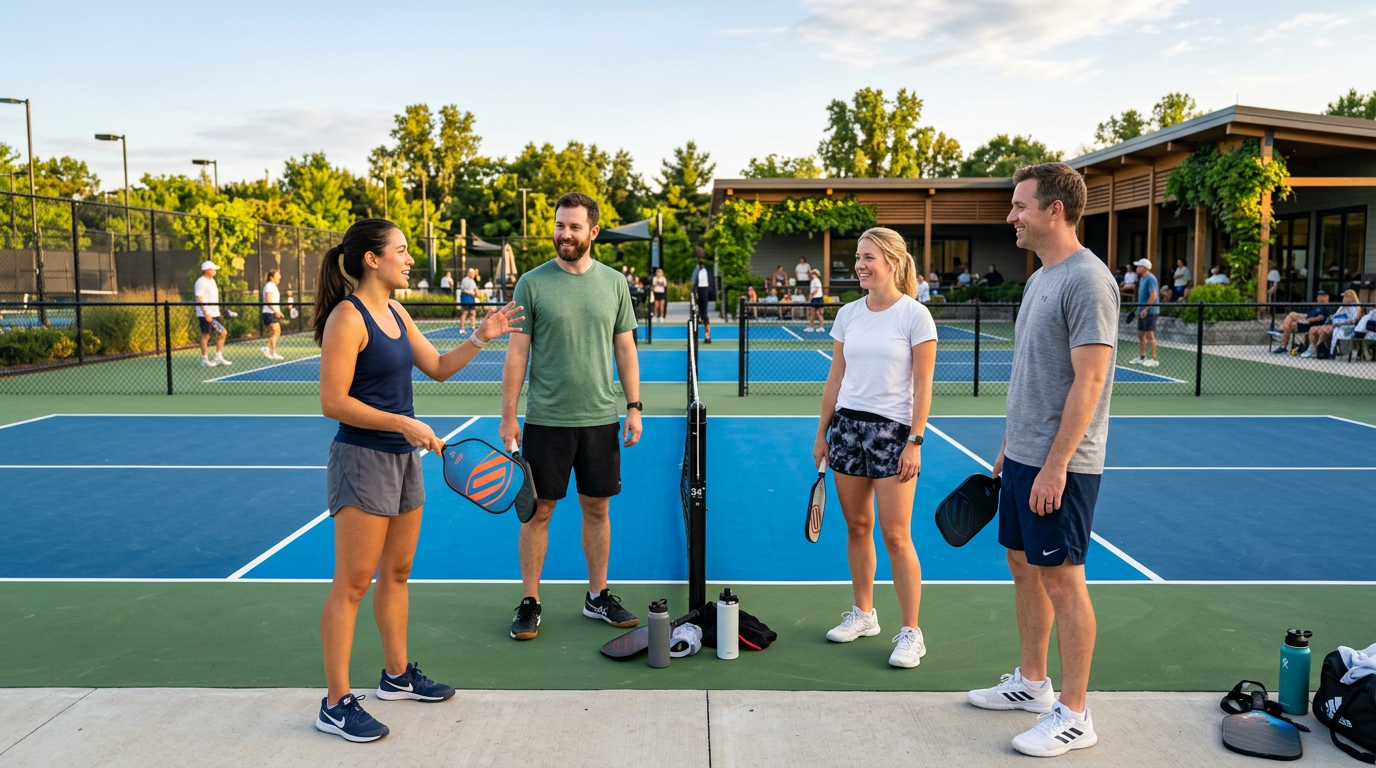
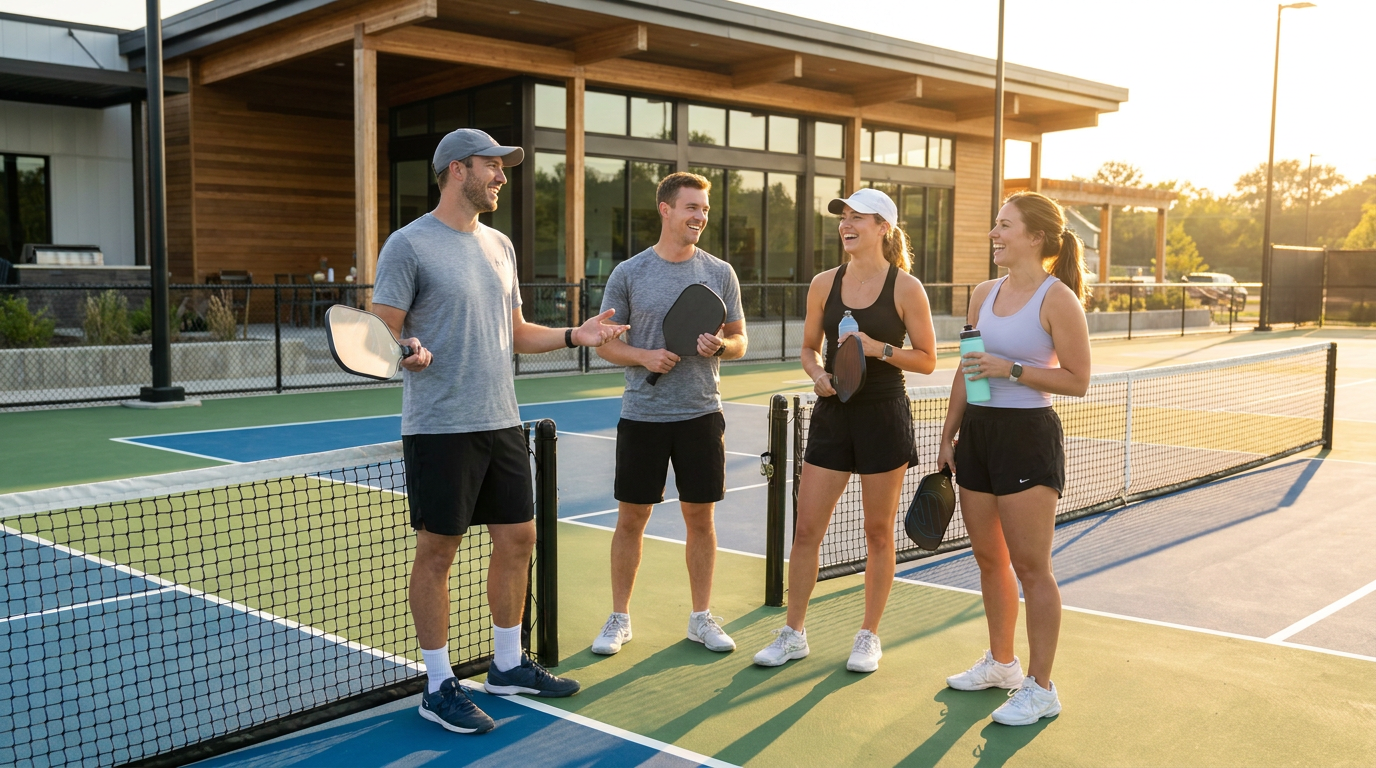
One of the things that surprises most new players is how social pickleball is between points and between games. The court is small enough that conversation happens naturally. Games are short enough that you're rotating regularly - playing with different people, against different people, getting a sense of different styles and abilities.
By the end of a session, you'll have interacted with more people than you would in an hour at a gym. It's one of those environments where you can turn up alone and leave feeling like you've been part of something.
The thing most people notice by the end of their first session isn't how much they've learned - it's how quickly the time went.
By the end of the session
You'll be warmer than you expected. Pickleball looks gentle from the sidelines. On court, you're moving constantly - short, sharp bursts rather than long runs, but movement nonetheless.
You'll also have a much clearer sense of the game than when you arrived. The rules that seemed abstract when explained will have started to make sense through experience. The scoring will feel less unusual. You'll have a feel for the paddle, a rough sense of where you want to improve, and probably a moment or two you're already thinking about.
Most people leave their first session already planning when they're coming back. That's not a guarantee. But it is what happens more often than not.
Find your first pickleball session on The Pickleball Directory | The Home of UK Pickleball and take it from there.
.png)