People say pickleball is social. It's one of the first things mentioned when someone tries to explain what makes the sport different. But "social" gets used to describe a lot of things - a gym class with a friendly instructor is social, technically. So it's worth being specific about what it actually means in the context of pickleball, and why it's more than a selling point.
It starts with the structure
Most sports require you to organise the social element yourself. You play the sport, and then, if you make the effort, you socialise around it. Pickleball builds it in from the start.
Sessions are almost always set up with a rotation system. Players move in and out of games, switching partners and opponents throughout the evening. You don't stay locked into one pairing for the whole session. By the end of an hour, you've shared a court with most of the people in the room. That rotation isn't just logistically convenient - it's the mechanism that makes the social side happen automatically, without anyone having to engineer it.
The court does the rest
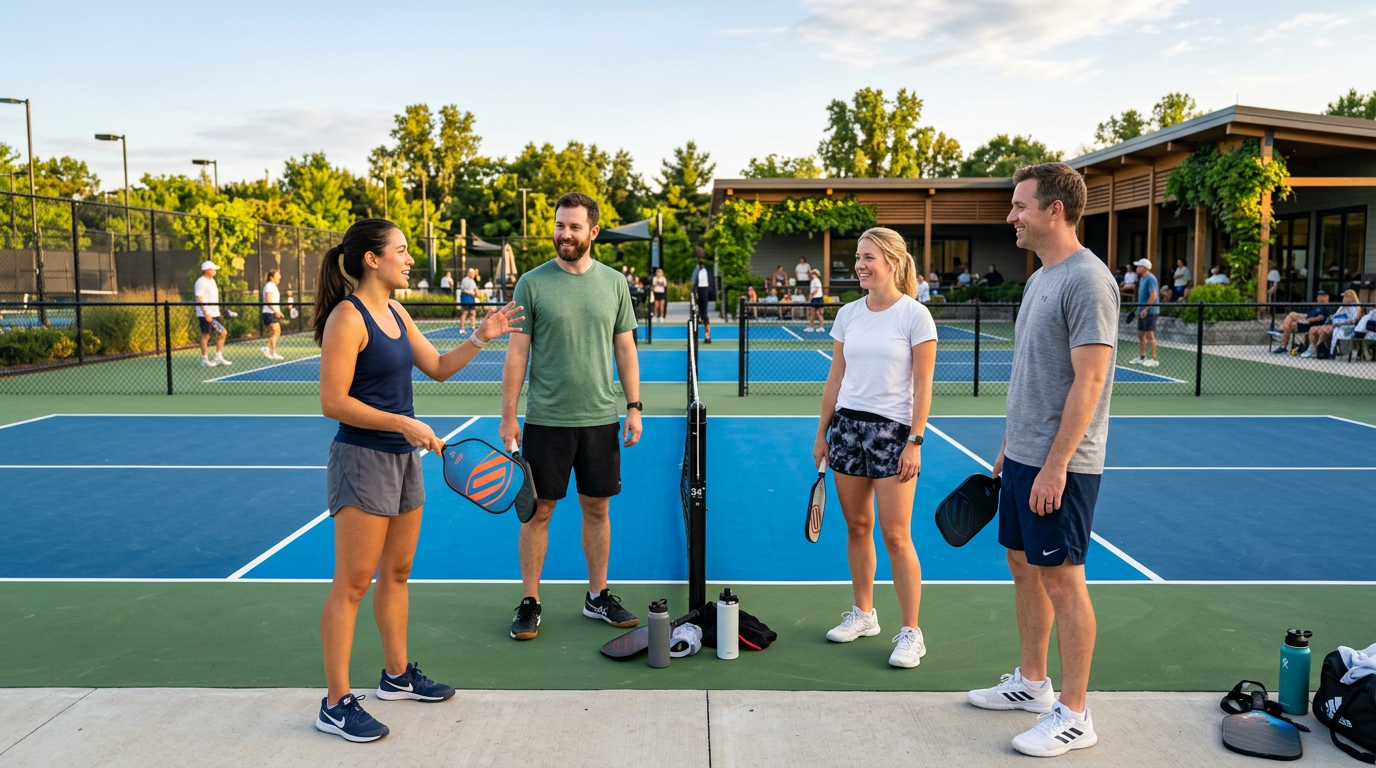
A pickleball court is small. Much smaller than a tennis court, and significantly more intimate than most other sports environments. You're close enough to the other players that conversation happens naturally - between points, between games, during the moments when someone is retrieving a ball. You don't need to make an effort to speak to people. The physical setup of the game means it happens without thinking.
Compare that to a gym, where earphones are the default and interaction is optional. Or a swimming pool, where conversation is practically impossible. Pickleball creates the conditions for connection in a way that most physical activities simply don't.
Most sports require you to engineer the social element. Pickleball builds it into the structure. The rotation system does the introductions so nobody has to.
You can turn up alone and leave feeling part of something
Walking into a new social environment alone is uncomfortable in almost every context. A new gym class, a new running club, a new anything - there's a period of being the person who doesn't know anyone and isn't quite sure where to stand.
Pickleball shortens that period dramatically. You arrive, you get put into a game, and within minutes you're on court with three other people sharing a competitive experience. You're not watching from the sidelines waiting to be included. You're already in it.
By the end of the session, you'll have played alongside most of the regulars, exchanged names, shared a few moments of good play and bad play - and accumulated the kind of easy familiarity that usually takes much longer to develop.
The atmosphere tends to be genuinely warm
It would be easy to dismiss this as something every sport says about itself. But there's a consistency to the pickleball experience across different venues and parts of the country that's worth noting. From the Friday night social sessions at Burnholme Sports Centre in York to the community sessions run by Exeter Pickleball Club, from Assembly Pickleball Club in Manchester to Grampian Pickleball Club in Aberdeen - the common thread is a warmth that doesn't feel performative.
New players are welcomed. Mistakes are laughed off. Experienced players are patient with beginners. The competitive element stays friendly rather than intense.
It works for people who aren't naturally social
This is perhaps the least obvious thing about pickleball's social dimension, and one of the most interesting. You don't need to be outgoing to benefit from it. You don't need to be good at walking into rooms and introducing yourself. The sport does the work.
The rotation puts you in games with new people. The proximity creates natural moments of interaction. The shared experience of a competitive rally - a well-played point, a disputed line call, a shot that goes embarrassingly wrong - generates the kind of spontaneous connection that doesn't require social confidence to create.
Plenty of people who describe themselves as introverted have found pickleball to be one of the most naturally social environments they've ever been in. Not because it demands sociability, but because it quietly creates the conditions for it without asking anything of you.
Pickleball is social in the way that good shared experiences tend to be - easy, unforced, and built around something everyone in the room actually enjoys.
So how social is it, really?
More than most people expect. And in a more genuine way than the word usually implies. The game brings people together. The structure keeps them mixing. The atmosphere makes them want to come back. And the friendships that form on a pickleball court have a habit of lasting well beyond it.
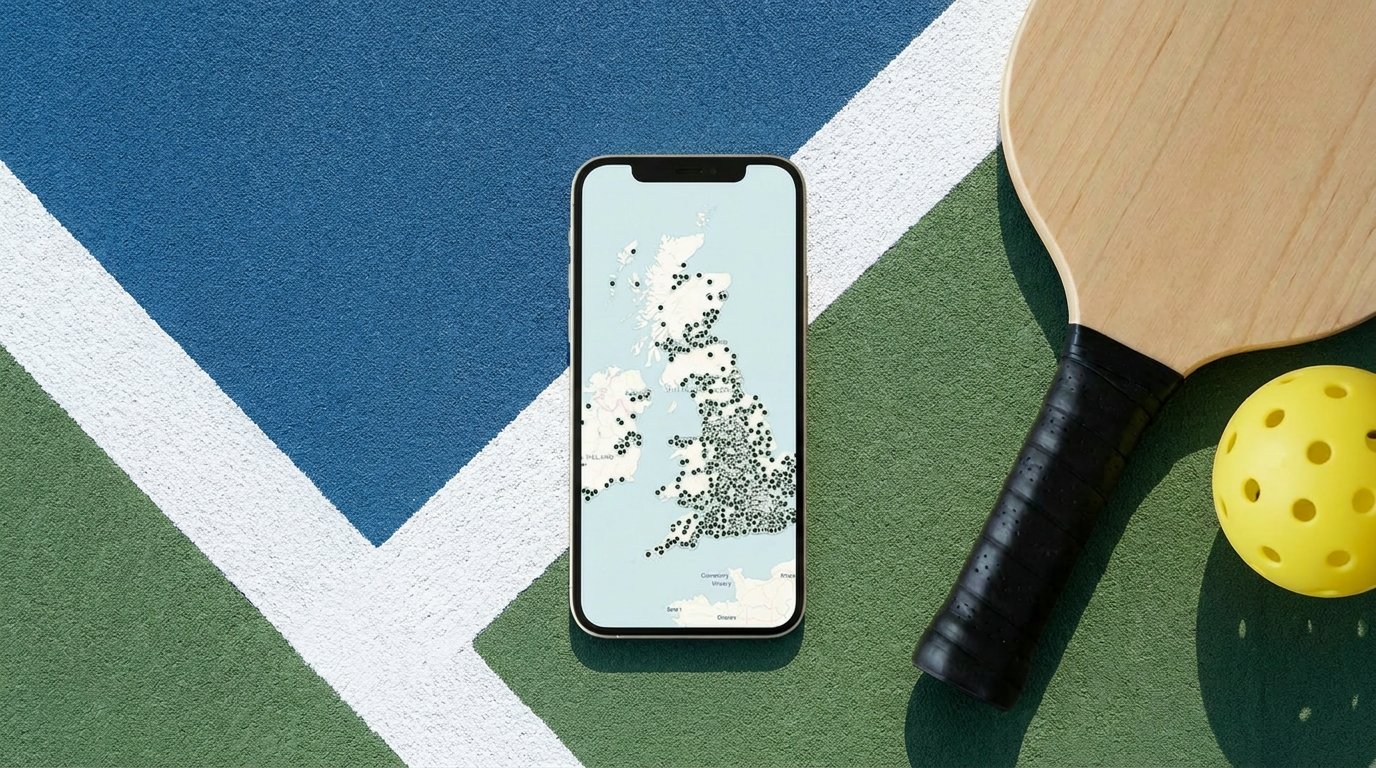
Find a pickleball session near you on The Pickleball Directory | The Home of UK Pickleball and experience it for yourself.


.avif)